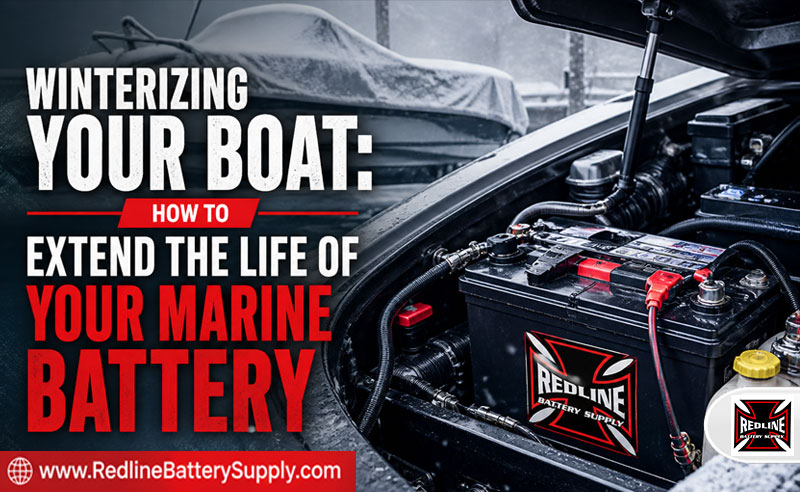
Marine Battery Maintenance is crucial for protecting your boat during the off-season and ensuring reliable performance when you return to the water, especially if you depend on systems like Deep Cycle Batteries. Proper winterization not only safeguards your investment but also helps extend battery lifespan and prevent unnecessary replacement costs. By following the right steps and care practices, you can keep your marine battery in optimal condition throughout the colder months. Here’s a clear, point-by-point guide to help you winterize your boat battery effectively:
1. Fully Charge Before Storage
Always start by fully charging your battery before storing it. A partially charged battery can freeze more easily in colder temperatures, leading to permanent damage. A full charge keeps the internal chemistry stable and prolongs lifespan.
2. Disconnect the Battery
Disconnect your battery from the boat to prevent slow power drains from onboard electronics. Even when turned off, small systems can gradually discharge the battery over time.
3. Clean the Battery Terminals
Dirt, corrosion, and moisture around terminals can reduce efficiency. Clean the terminals using a baking soda and water solution, then dry thoroughly. Apply a corrosion inhibitor to keep connections in top condition.
4. Store in a Cool, Dry Place
Pick a place for storage that stays dry and allows good airflow. Avoid extreme cold or heat. Ideally, store your battery in a place where temperatures remain stable to prevent internal stress and damage.
5. Use a Battery Maintainer
A battery maintainer or trickle charger is a smart investment during the off-season. It keeps your battery at optimal charge levels without overcharging, which is crucial for maintaining deep cycle batteries.
6. Check Water Levels (For Flooded Batteries)
If you’re using a flooded lead-acid battery, check electrolyte levels before storage. Top off with distilled water if necessary, ensuring the plates are fully submerged.
7. Inspect for Damage
Look for cracks, leaks, or swelling in the battery casing. Addressing minor issues early can prevent complete battery failure later.
8. Avoid Storing on Concrete Floors
Place your battery on a wooden or insulated surface rather than directly on concrete. This helps prevent unnecessary discharge and protects the casing.
9. Perform Monthly Checks
Even in storage, check your battery once a month. Ensure it maintains charge and shows no signs of deterioration. Recharge if voltage drops below recommended levels.
10. Reinstall and Test Before Use
When boating season returns in Melbourne, Florida, reinstall your battery and perform a full system check. Ensuring everything works smoothly helps avoid surprises on the water.
Final Thoughts
At Redline Battery Supply, we take pride in helping boat owners stay prepared year-round with expert marine battery maintenance support and premium deep cycle batteries. If you’re getting ready to winterize or need guidance choosing the right battery, explore your options at redlinebatterysupply.com or speak directly with our knowledgeable team at 321-327-8995—we’re here to keep you powered and ready for every season on the water in Melbourne, Florida.
More News